Why Consistency Beats Fad Diets
Most fad diets promise fast results and deliver frustration. This article breaks down why consistency, awareness, and calorie/macro tracking outperform restrictive diet trends in the long run, and why sustainable progress is built on habits you can actually maintain.
 makko
makko 
Why Consistency Beats Fad Diets: The Long-Term Case for Tracking Calories and Macros
If you’re like most of us, you’ve felt the allure of the latest miracle diet. Cut out all carbs for 30 days? Drink nothing but celery juice? It’s tempting when an influencer shows off dramatic results in just weeks. Deep down, though, many frustrated dieters suspect the truth: those flashy fad diets rarely lead to lasting success. And they’re right. The real “secret” to sustainable progress isn’t a secret at all – it’s consistency. In this article, we’ll explore why a steady, science-backed approach (like tracking your calories and macronutrients) outperforms any quick-fix diet trend over the long haul. We’ll break down the science, address different needs (men, women, various dietary preferences), and show how sticking to the basics can transform your body and health in a way no gimmicky fad can.
The Allure and Pitfalls of Fad Diets
Fad diets have a way of promising everything: rapid weight loss, detoxed bodies, boundless energy – all with minimal effort and in record time. It sounds great, which is exactly why so many of us have tried one or two (or ten…). These diets are typically characterized by some common red flags:
- Promises of rapid results: “Lose 20 pounds in 2 weeks!” If it sounds too good to be true, it probably is.
- Drastic restrictions: Many fad diets eliminate entire foods or food groups (no carbs, no fat, only grapefruit, etc.), making them nutritionally questionable.
- One-size-fits-all approach: They rarely account for personal differences or long-term lifestyle changes – just a short-term fix.
- Lack of sustainability: By design, these plans are hard to stick to forever. You won’t find many people who plan to drink lemon-cayenne pepper water for breakfast for life.
- Minimal scientific backing: Fad diets often rely on hype and anecdote. Solid evidence or peer-reviewed research? Usually missing.
It’s easy to get drawn in by these promises when you’re eager for change. And to be fair, some fad diets do lead to short-term weight loss. Severely cutting carbs or doing a week-long “cleanse” often makes the scale drop initially. But here’s the catch: short-term weight loss is very different from long-term weight maintenance.
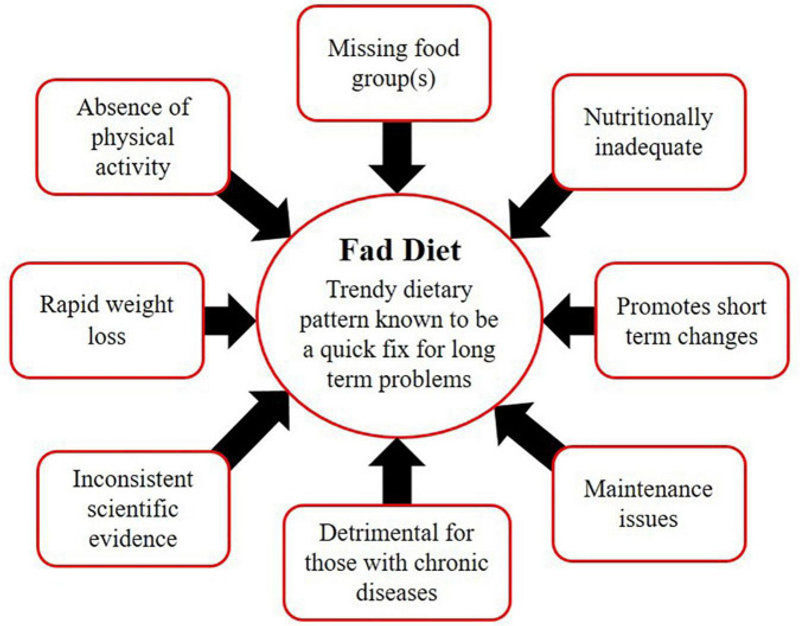
Figure: Common characteristics of fad diets include promises of quick weight loss, elimination of entire food groups, unsustainable short-term changes, lack of physical activity guidance, and little scientific evidence. Such diets might deliver fast results, but they’re notoriously difficult to maintain and can leave you with nutritional gaps.
The Yo-Yo Effect: Short-Term Loss, Long-Term Regain
Most fad dieters unfortunately know the cycle too well: lose weight fast, then watch it creep back on (often with a little extra). This yo-yo effect isn’t just anecdotal – it’s backed by research. In a meta-analysis of 29 long-term weight loss studies, more than half of the weight lost on diets was regained within two years, and by five years over 80% of the lost weight was regained. In other words, the majority of people end up nearly back where they started (or worse) after following extreme diets.
Why does this happen? One reason is physiological: when you crash diet, your body fights back. Dramatic calorie cuts can trigger a slowdown in metabolism and a spike in appetite as your system tries to preserve energy. Essentially, your body doesn’t know that the sudden lettuce-and-grapefruit regimen is intentional – it thinks you’re starving, and it responds by making you hungrier and more prone to storing fat. Eventually, willpower wanes (after all, who can resist food forever?), and old eating patterns resume. The result is weight regained, often quickly.
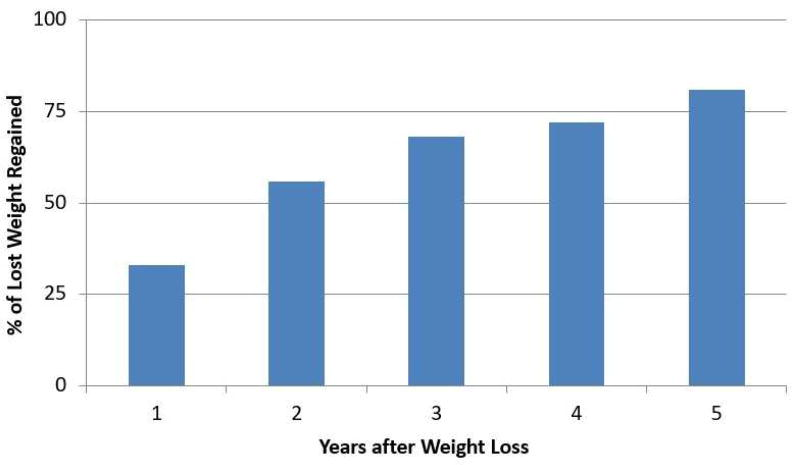
Figure: Typical weight loss from a crash diet is followed by a rebound. In one analysis, dieters regained about 50% of lost weight within 2 years, and 80%+ within 5 years. This “yo-yo” pattern is common with fad diets – a rapid drop, a short plateau, then weight creeping back up.
Beyond just losing and regaining the same pounds, weight cycling (repeated loss and regain) may have health consequences. Some studies suggest that yo-yo dieting can increase the risk of diabetes, heart disease, and other problems compared to maintaining a stable weight. So, it’s not only frustrating – it could be harmful to bounce your weight up and down with extreme diets.
Consistency: The “Secret” Weapon for Lasting Change
After riding the rollercoaster of fad diets, the idea of plain old consistency can sound almost boring. But consistency is the unglamorous truth behind virtually every long-term weight loss success story. The formula that works is remarkably straightforward: a moderate calorie deficit, sustained over time, coupled with balanced nutrition and healthy habits. No wild eliminations, no detox gimmicks – just sticking with reasonable changes day in and day out.
Consistency works because it turns actions into habits. When you consistently practice portion control, or hit your step count every day, or log your meals, these behaviors become almost second nature. In contrast, a dramatic 7-day juice cleanse is so outside normal behavior that it teaches you very little about your regular life post-diet. As one registered dietitian aptly put it, there’s “no magic pill” for quick weight loss – what matters is finding an approach you can maintain for the long haul.
Psychologically, consistency is powerful too. It builds confidence. Each small promise you keep to yourself (like recording your lunch in a food journal, or cooking a healthy dinner when you planned to) is a mental win. Over time, those wins stack up, reinforcing your identity as someone who has control over their eating habits – someone who doesn’t need the latest fad diet because they’ve got a sustainable routine. This mindset shift is gold. Instead of feeling like you’re constantly either “on a diet” or “off the wagon,” you develop a steadier relationship with food and your body.
It’s also important to mention that consistency doesn’t mean perfection. Far from it. It’s actually more effective to be “mostly consistent” than to be perfect for a short burst and then give up. For example, a study on self-monitoring found that logging food at least 3 days a week consistently was enough to improve weight loss outcomes – doing it every single day wasn’t necessary, as long as the habit was regular week after week. In practice, this might mean you track your meals on weekdays and are a bit more flexible on Saturday, and that’s fine because over time those weekday efforts add up. The key is the pattern, not any single day’s perfection.
Why Tracking Calories and Macros Works When Diets Don’t
So, how do we put consistency into action? One tried-and-true strategy is tracking what you eat – specifically tracking your calories and macronutrients. This approach often goes by names like calorie counting, macro tracking, or flexible dieting. Whatever you call it, it’s not a fad diet but a tool for awareness and accountability. In fact, one fitness coach famously noted that “tracking macros… is not a diet. No, it’s eating with purpose.” Unlike fad diets that impose arbitrary rules (“no carbs after 6pm!”), tracking is about understanding the actual energy (calories) and nutritional building blocks (macros) you’re consuming, and how they relate to your goals.
What are macros? “Macros” is short for macronutrients – the three main categories of nutrients that make up our food: protein, carbohydrates, and fats. (Alcohol is technically a fourth macro, but most tracking focuses on the big three.) Each macro plays different roles in the body and has a certain calorie value per gram: protein and carbs have 4 calories per gram, fat has 9. When you track macros, you’re essentially counting calories broken down by type. For example, a day’s intake might be 1,800 calories composed of 150g protein, 180g carbs, and 60g fat. This level of detail helps ensure you’re not just hitting an arbitrary calorie target, but doing so in a way that supports your body’s needs – like getting enough protein to preserve muscle, enough fat for hormone health, and enough carbs to fuel your activity.
Why go to this level of detail? Because calories determine whether you lose, gain, or maintain weight, but macros determine how you lose or gain (for instance, building muscle vs. storing fat). Two people could eat 1,600 calories a day, but if one gets ample protein and the other eats mostly sugar, the outcomes will look and feel different. Tracking macros combines the best of both worlds: you manage your energy balance and your nutrition quality.
Let’s highlight a few reasons tracking calories and macros consistently beats jumping on a fad diet:
- It’s flexible and personalized. Instead of a one-size-fits-all menu, you can eat the foods you love as long as they fit your calorie/macro goals. Whether you’re vegetarian, paleo, gluten-free, or have a sweet tooth, no foods are “off-limits” – you just learn to moderate them. This flexibility makes it far more sustainable than a rigid diet. Over time, many people actually enjoy the freedom: want pizza tonight? Sure, maybe you budget for it by having a lighter lunch. Life goes on, and you don’t feel like you “broke the diet” because there’s no forbidden food to break. It’s a lifestyle, not a punishment.
- You gain awareness and accountability. Most of us (even experts) are bad at estimating how much we really eat. Tracking is like holding up a mirror to your diet – you see the truth of your intake. That awareness alone can drive better choices (you might think twice about that 500-calorie frappuccino when you realize it’s a third of your day’s calories!). Studies have shown that this kind of self-monitoring is a cornerstone of successful weight management. In fact, frequent and consistent food logging is strongly linked to better weight loss and maintenance. It’s not about obsessing over numbers; it’s about having reliable data so you’re not flying blind.
- It emphasizes quality, not just quantity. By tracking macros, you naturally start paying attention to what you’re eating, not just how much. For example, you’ll notice that a donut might fit your calories but gives almost no protein, whereas a Greek yogurt with berries is a more balanced choice that keeps you fuller. Over time, macro tracking gently nudges you toward more protein and fiber (because they keep you satiated), healthy fats, and smarter carb choices, without banning any particular food. It’s a balanced approach grounded in nutrition science rather than diet dogma.
- It’s backed by science and real-world success. Unlike fad diets that often lack solid evidence, the practice of calorie and nutrient tracking has decades of research behind it. Consistent self-monitoring – whether through a food diary or an app – is one of the most common habits of people who successfully lose weight and keep it off. The National Weight Control Registry (which tracks thousands of individuals who maintained significant weight loss) found that keeping food logs and a consistent eating pattern were key behaviors among those long-term “winners”. Moreover, studies show that adequate protein intake (often achieved via macro tracking) can improve satiety and preserve lean muscle during weight loss, helping you look and feel better than the typical crash dieter who might lose muscle and fat indiscriminately. In short, there’s hard evidence that tracking works, whereas the evidence for most fad diets is shaky at best.
- It teaches lifelong skills. Perhaps one of the most underrated benefits: by tracking your intake, you learn a ton about nutrition and your own habits. After a while, you’ll know roughly how many calories and grams of protein are in that bowl of oatmeal or that chicken burrito without even logging it, because you’ve built a mental library. This makes it easier to maintain your progress even if you later transition to a more intuitive style of eating. In contrast, if you followed an all-cabbage diet, what did you learn except how to endure cabbage? Tracking cultivates understanding, which is empowering and lasts far beyond the period you actively track.
Now, it’s worth acknowledging that tracking does require effort. In the beginning, it can feel tedious to weigh portions or log every meal. The good news is that technology has made this much easier. There are many apps (from the ubiquitous MyFitnessPal to newer ones like Makko) that streamline calorie and macro tracking with food databases, barcode scanners, and even AI image recognition. These tools have turned what used to be a chore with pen-and-paper into something you can do in a minute on your phone. And remember, you don’t need to be 100% precise at all times – it’s about consistency and honesty with yourself. Many people find that after tracking regularly for a while, they get a pretty intuitive sense of portion sizes and macro balance, so it’s less necessary to log meticulously later on. Think of tracking as training wheels for a sustainable diet: it guides you until you can ride on your own.
Adapting the Approach to You: Men, Women, and Dietary Preferences
One major advantage of tracking calories and macros is that it’s adaptable to virtually anyone’s needs – it’s not “one-size-fits-all” like most fad diets. Whether you’re a 25-year-old male bodybuilder, a 45-year-old woman with hypothyroidism, vegan, keto, or anything in between, the principles of energy balance and proper macro nutrition still apply. You just tailor the numbers to your situation.
Gender and physiology. Men and women often experience weight loss differently. For instance, men generally burn calories faster at rest (thanks to typically higher muscle mass), and they might see quicker initial results on the scale. Women’s bodies, on the other hand, can be a bit “thrifty” – a woman’s metabolism may adapt and slow down more in response to calorie restriction, as a protective mechanism for survival and reproduction. Women also face hormonal cycles that can affect hunger and water retention; it’s not uncommon for consistency to feel harder during, say, PMS when cravings spike or energy dips. Knowing this, women shouldn’t be discouraged if progress seems slower or if the scale bounces around their menstrual cycle – it’s normal. The key for both sexes is patience and adjustments, not abandonment of the plan. If a woman finds her deficit too aggressive and her body is fighting back, she can increase calories slightly or prioritize protein to help satiety, and continue on a gentler downward trend. If a man finds he’s dropping weight too fast (yes, it happens), he can eat more to avoid losing muscle. Tracking allows these fine-tunings. Instead of blaming your biology, you work with it: the numbers can be adjusted to find that sweet spot where you’re making progress without misery.
Age and life stage. Similar logic applies to different ages and life situations. A new mom returning to fitness, a 50-year-old dealing with a slower metabolism, or a college student on a budget – all can use tracking, but their calorie needs and macro splits will differ. The beauty is you have the data to back into the right plan. For example, a breastfeeding mom might need a higher calorie target to ensure milk supply and energy, with extra emphasis on protein and healthy fats. An older adult might prioritize protein and fiber to counteract muscle loss and support digestion. Tracking is agnostic to these scenarios; you set your targets based on your needs. Contrast this with a cookie-cutter fad diet that doesn’t care if you’re an athlete or sedentary, 20 or 60 – it gives everyone the same rules. No wonder those fail so often.
Dietary preferences and restrictions. Are you vegan or vegetarian? You can absolutely track macros – you’ll just be getting protein from plant sources like beans, tofu, lentils, and so on. In fact, tracking can ensure you’re hitting protein goals that some plant-based eaters struggle with, while still adhering to your ethical or religious food choices. Prefer eating low-carb or keto? You can do that within a tracking approach too: simply set a lower carb, higher fat macro target. There’s nothing inherently wrong with liking some aspects of a “fad” diet – maybe you feel better cutting out sugar or you love paleo-style meals – and with tracking you can incorporate those preferences in a controlled, measurable way. The difference is, you’re not blindly following someone else’s rules; you’re customizing a plan for yourself. Even if you have medical needs (like managing blood sugar for diabetes or balancing macros for PCOS), tracking can be adapted with guidance from a professional. The point is one approach can span countless lifestyles. It’s the anti-fad-diet in that sense – instead of forcing you into a mold, it shapes itself around you.
Lastly, let’s not forget cultural and personal food choices. Perhaps you enjoy traditional dishes that don’t fit neatly into a trendy diet cookbook. With calorie and macro tracking, no food is “bad.” You can log your grandmother’s curry or your favorite lasagna. You might learn to moderate the portion or tweak the recipe for lighter ingredients, but you never have to excommunicate the foods that are part of your life and heritage. This is huge for long-term compliance, because food is not just fuel – it’s culture, comfort, social connection. A sustainable approach respects that. By allowing everything in moderation, tracking fosters a much healthier relationship with food than the binge/restrict cycle so many fad dieters fall into.
The Science of Staying on Track
At this point, you might be thinking: “Okay, consistency and tracking make sense, but how do I actually stick with it when life gets crazy?” Great question – because theory only matters if we can apply it in real life. Here are some evidence-based tips for turning this approach into long-term success:
Set Realistic Goals (and Timeframes). One reason fad dieters regain weight is that they often aimed for an unrealistically aggressive goal (e.g., drop 30 lbs in a month). For consistency, it helps to reframe success as steady progress: losing about 0.5-1% of your body weight per week is generally a safe, sustainable pace for fat loss. That might sound slow, but over a year that could be 25-50 lbs down – and far more likely to stay off. Remember, even a 5-10% weight loss can significantly improve health markers, and those losses, while modest, are maintainable. So, set a goal that is challenging but not extreme, and give yourself the time to achieve it gradually.
Make Tracking Efficient. Use the tools at your disposal to simplify logging. Save your favorite meals in your tracking app, use a food scale for a couple of weeks to train your eye on portion sizes (after that you might only weigh occasionally), and take advantage of features like barcode scanning. After an initial learning curve, daily tracking can take as little as 5-10 minutes. If it ever feels laborious, remind yourself why you’re doing it – it’s a short daily habit that keeps you from falling into the long-term pain of another failed diet attempt.
Plan for Flexibility and Treats. Consistency doesn’t mean rigidity. It’s actually because you’re tracking that you can work in a cookie or a beer here and there without derailing progress. In fact, planning small indulgences can prevent the feeling of deprivation that causes people to abandon diets. Maybe you allocate 200 calories each day for a treat, or you stick to your macros strictly on weekdays and loosen up slightly on Saturday dinner. Find a rhythm that feels balanced. So long as you’re hitting your weekly averages, a higher day and a lower day can balance out. The mantra here is “never two bad days in a row” – if you do go overboard at a party, just log it, learn from it, and get back on track the next day. No guilt trip needed.
Leverage Other Self-Monitoring Habits. Tracking food is powerful, and pairing it with other consistent habits multiplies the effect. For example, weighing yourself regularly (say, weekly or bi-weekly) can help you notice trends and adjust as needed – research shows frequent self-weighing is common among weight loss maintainers. Some people also track their workouts, steps, or sleep. These metrics provide feedback and keep you engaged. However, be careful not to get overwhelmed; you don’t need to track everything at once. Start with the keystone habit (food intake), and layer others if they help your journey.
Build a Support System. Just because you’re not on a named “diet” doesn’t mean you have to go it alone. Online communities, friends, or family who also practice healthy eating can offer encouragement and tips (there are many forums for macro tracking or using specific apps). If you prefer professional guidance, a dietitian or coach familiar with macro-based eating can customize targets and troubleshoot challenges. Even the act of sharing your goals with a supportive partner can increase your accountability. The consistent approach isn’t a branded program, but it’s a well-trodden path – plenty of people can share their experiences and advice with it.
Finally, remember why you started. Fad diets often play on a moment of desperation, but choosing consistency is a choice made from a place of empowerment and knowledge. Keep in mind the frustrations of past quick-fix attempts and how you want this time to be different. Many folks find it helpful to shift their focus from purely the scale to non-scale victories when being consistent: better energy, fitter clothes, feeling stronger, improved bloodwork, or simply the peace of mind that you’re in control of your eating instead of at the mercy of the latest diet trend. Those wins are gold and will fuel your motivation more deeply than seeing a certain number for one fleeting week.
The Bottom Line
At the end of the day, consistency beats intensity. Fad diets burn bright and flame out, but a steady approach like tracking calories and macros creates lasting change. It might not sound as sexy in a headline – “Woman loses 5 pounds in a month by eating balanced meals and logging them” doesn’t go viral like “Lose 30 pounds in 21 days!” – yet it’s exactly this unflashy method that actually delivers results year after year. By committing to understanding your nutrition and staying the course, you’re investing in a transformation that won’t vanish when the next trend hits.
The long-term case for tracking and consistency is clear. You’ll nourish your body with the right amount of fuel, tailored to you. You’ll avoid the nutritional pitfalls and health risks of extreme diets. You’ll gain insight into your habits and build healthier ones. And most importantly, you’ll break free from the lose-gain, on-off dieting merry-go-round that’s been holding you back. Weight management becomes a part of your lifestyle – something you live with relative ease – rather than a frantic project that periodically takes over your life.
So the next time you’re tempted by a shiny new diet craze, take a deep breath and remember what you now know. You have a smarter strategy in your toolkit. It doesn’t require special shakes, forbidden foods, or suffering – just a bit of planning, a bit of patience, and a lot of consistency. Over time, the results will speak for themselves, and they’ll be real. In the journey of fitness and health, slow and steady truly wins the race, and with calorie and macro tracking, you’ve got the roadmap to get there.
Sources:
Middleton, K. R., et al. (2014). Dietary Self-Monitoring and Long-Term Success with Weight Management. Obesity (Silver Spring). 22(9): 1858–1866.
MacLean, P. S., et al. (2015). Biological responses to weight loss and weight regain: the weight reduction paradigm. Diabetes. 64(7): 2299–2309.
GQ Magazine. (2024). Why Counting Macros Is Better Than Any Fad Diet.
Tahreem, et al. (2022). Fad Diets: Facts and Fiction. Frontiers in Nutrition, 9: 960922.
Owensboro Health (2026). Steps To Maintain Your Weight Loss. Community Wellness Article.
Mason Park Medical (2026). Key Differences in Weight Loss for Men and Women.
Paddon-Jones, D., et al. (2008). Protein, weight management, and satiety. Am J Clin Nutr, 87(5): 1558S-1561S.
University of Florida IFAS (2024). The Truth About Diets: How to Achieve Sustainable Results.
Start Tracking with Makko
Put these insights into action. Track your calories, monitor your progress, and reach your goals.
Try Makko Free for 30 Days